
The Number on the Label Isn't the Number That Matters. Here's What Is.

When American cat owners compare FIP oral treatments, the conversation almost always ends up in the same place: milligrams. How much GS-441524 is in each capsule. Which brand has more. Which number is bigger.
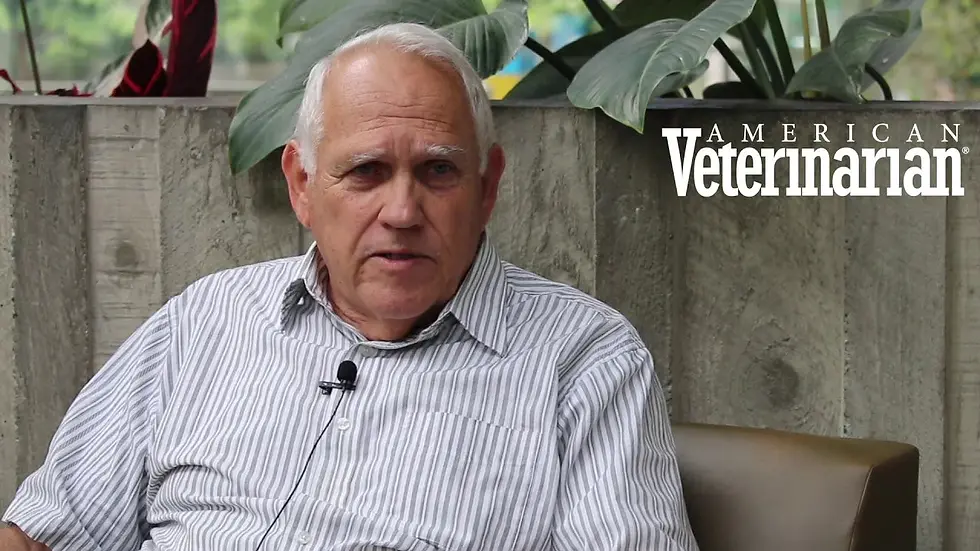
It is an understandable way to shop. It is also the wrong question — and understanding why it is the wrong question could be the most important thing you read before starting your cat's FIP treatment.
This is not a marketing position. It is the documented conclusion of Dr. Niels C. Pedersen of UC Davis — the American researcher whose laboratory produced the original clinical trials that proved GS-441524 works against Feline Infectious Peritonitis (FIP), and whose work is the reason any of these products exist at all. In November 2021, he co-authored a paper with Nicole Jacque through the UC Davis Center for Companion Animal Health that the oral GS-441524 industry has been largely silent about ever since.
The paper is titled: "Alternative Treatments for Cats with FIP and Natural or Acquired Resistance to GS-441524."
The man who invented GS-441524 treatment spent 2021 writing a paper about how GS-441524 alone is failing cats. That paper is the scientific foundation behind CureFIP USA Oral Capsules.
What Three Years of Clinical Data Actually Showed
Before Pedersen's 2021 paper, resistance to GS-441524 was a concern discussed mainly in closed veterinary circles. After it, there was no longer any scientific basis for dismissing it.
Research by Dr. Niels C. Pedersen, UC Davis
Alternative Treatments for Cats with FIP and Natural or Acquired Resistance to GS-441524 — UC Davis CCAH, 2021
Efficacy and Safety of GS-441524 for Treatment of Cats with Naturally Occurring FIP — J Feline Med Surg, 2019
GS-441524 Strongly Inhibits FIP Virus in Tissue Culture and Experimental Cat Infection Studies — Vet Microbiology, 2018
The paper documents confirmed resistance cases across three years of GS-441524 treatment. Not anecdotal reports. Not theoretical projections. Confirmed cases, with a particularly high concentration in neurological Feline Infectious Peritonitis (FIP) — the form that requires the longest treatment duration and carries the highest stakes if treatment fails.
Pedersen and Jacque wrote directly:
"Resistance to GS-441524 has been confirmed in a number of cats that have been treated for Feline Infectious Peritonitis (FIP) with GS-441524 in the last 3 years, especially among cats with neurological Feline Infectious Peritonitis (FIP)."
The biological reason is straightforward. GS-441524 operates as a non-obligate RNA chain terminator — it inserts itself into the FIP virus's replication process and blocks the RNA strand from extending. This is precise, effective, and specific. But specificity creates vulnerability. The more targeted a mechanism, the more predictable the mutation path the virus needs to find its way around it. And RNA viruses — which mutate at extraordinarily high rates — are exactly the kind of pathogen that can find and exploit that path given enough time and replication cycles.
An 84-day oral treatment course gives the virus a lot of replication cycles.
Why Stacking More Milligrams Doesn't Fix This
The intuitive American consumer response to a resistance problem is to want more: more milligrams, higher concentration, a bigger number on the box. The implicit logic is that if the drug is failing at lower doses due to resistance, higher doses will overwhelm it.
Pedersen tested this logic and found it insufficient. How effective is GS-441524 in treating Feline Infectious Peritonitis (FIP) in cats? →
He acknowledged that dose escalation can work against partial resistance in some cats — but stated plainly that resistance can become "complete or so high that increasing the dose is no longer effective."
At that point, you are not giving your cat more protection. You are paying more for a compound that has already reached its ceiling.
The solution Pedersen identified was not a larger dose of the same mechanism. His paper states the path forward requires "using another antiviral that has a different mechanism of resistance, either alone or in combination."
A higher milligram count on a pure GS-441524 capsule is the same mechanism, amplified. It is not what Pedersen recommended.
The Combination Therapy Conclusion That Changed Everything
The most consequential section of Pedersen's 2021 paper is the one that points beyond GS-441524 entirely — and directly to where the field needs to go.
"Combinations of molnupiravir with GC376 or GS-441524 will be used more and more frequently, not only to synergize or complement their individual antiviral effects, but also as a way to prevent drug resistance."
"Medicinal cocktails have been very effective in preventing drug resistance in HIV/AIDS patients."
The HIV parallel is not rhetorical decoration. It is a precise scientific analogy. HIV was unmanageable on single-drug therapy for the same structural reason FIP monotherapy carries resistance risk: one mechanism leaves one escape route. The transformation of HIV from fatal to manageable happened not because better single drugs were found, but because combination therapy closed the escape routes simultaneously.
Pedersen — writing in 2021, from the institution that created GS-441524 treatment — was drawing that line explicitly for the FIP field. Most companies selling oral GS-441524 in 2025 have chosen not to follow him across it.
Two Mechanisms, Two Resistance Profiles
The pharmacological case for combination therapy rests on what happens when you add a second compound that works through a fundamentally different mechanism.
CureFIP USA Oral Capsules combine GS-441524 with EIDD-1931 — the active metabolite of molnupiravir. These two compounds do not replicate each other's action. They attack the FIP virus at entirely separate points in its lifecycle.
GS-441524 — Chain Termination Blocks viral replication at the RNA synthesis stage. The virus must mutate its RNA-dependent RNA polymerase to develop resistance. This mutation has a real cost to the virus's fitness.
EIDD-1931 — Lethal Mutagenesis Does not block replication — it corrupts it. EIDD-1931 is incorporated into viral RNA during copying and floods the replicated output with genetic errors at a rate the virus cannot sustain viable replication. Pedersen's paper specifically identifies that EIDD-1931 "has been shown to function as an RNA mutagen causing several defects in the viral genome" and that "its resistance profile will be different" from GS-441524.
For the FIP virus to develop resistance against this combination, it would need to independently and simultaneously evolve two separate mutations addressing two separate mechanisms at two separate points in its lifecycle. The probability of this drops dramatically. This is not a theoretical claim — it is the same pharmacological principle behind every successful antiviral combination regimen in modern medicine.
Further Reading:
What a Lower GS-441524 Count Actually Means
CureFIP USA Oral Capsules contain less GS-441524 per capsule than some competing products. We are addressing this directly because the question deserves a direct answer.
The GS-441524 dose in our capsule is lower because it does not carry the full antiviral burden alone. EIDD-1931 is doing independent antiviral work alongside it. The combined suppression pressure on the FIP virus — across two mechanisms, two resistance profiles, two points in the viral lifecycle — exceeds what a higher-dose single-compound capsule delivers through one mechanism alone.
When you compare our GS-441524 milligram count to a competitor's, you are comparing one number from our formulation to their entire formulation. That comparison does not account for EIDD-1931 at all. It is incomplete by design — not ours.
A single-compound capsule with a high milligram count is optimized for a metric. CureFIP USA Oral Capsules are optimized for what happens inside your cat over 84 days of treatment.
The Only Question Worth Asking Before You Choose
Before comparing prices, before comparing milligram counts, before reading any more product descriptions:
Does the formulation you are considering have a mechanistically distinct answer to drug resistance?
Not a higher dose. Not a proprietary excipient. A second antiviral that attacks the virus through a different mechanism, with a different resistance profile, that closes the escape route the first compound leaves open.
If the product contains only GS-441524, the answer is no — regardless of the milligram count on the label. That is not our assessment of our competitors. That is the documented conclusion of the UC Davis researcher who created GS-441524 treatment, published in 2021, available to every company formulating oral FIP products today.
CureFIP USA Oral Capsules were formulated with Pedersen's conclusion as the design brief. Your cat deserves a treatment that was.
Related Articles:
Understanding Feline Infectious Peritonitis (FIP) Relapse: Why It Happens and What to DoWhat Are the Early Symptoms of Feline Infectious Peritonitis (FIP) That Cat Owners Should Know?
Pedersen NC, Jacque N. "Alternative Treatments for Cats with FIP and Natural or Acquired Resistance to GS-441524." UC Davis Center for Companion Animal Health, November 3, 2021. Available at: ccah.vetmed.ucdavis.edu
CureFIP USA Oral Capsules are available in multiple strengths. Dosing is determined by body weight and Feline Infectious Peritonitis (FIP) classification. Always follow the treatment protocol provided by your veterinarian or our clinical team.
Comments